
You’re walking down Bedford Avenue, checking your map for that new coffee spot, and: crack. Your iPhone meets the Brooklyn pavement. The panic sets in. You start Googling repairs and suddenly you’re hit with a wall of jargon: OEM, Grade A+, Aftermarket, Refurbished, Soft OLED.
It’s a minefield of terminology that can leave even the most tech-savvy New Yorker feeling dazed. At Repaired Collective., we believe in radical transparency. You deserve to know exactly what is going into your device, why it costs what it does, and how it’s going to perform six months down the line.
Choosing the right part isn't just about saving a few bucks today; it’s about ensuring your disfigured devices don’t turn into deadbeat batteries or glitchy bricks tomorrow. Let’s pull back the curtain on the iPhone repair industry and look at the truth about part quality in 2026.
What Does "OEM" Actually Mean?
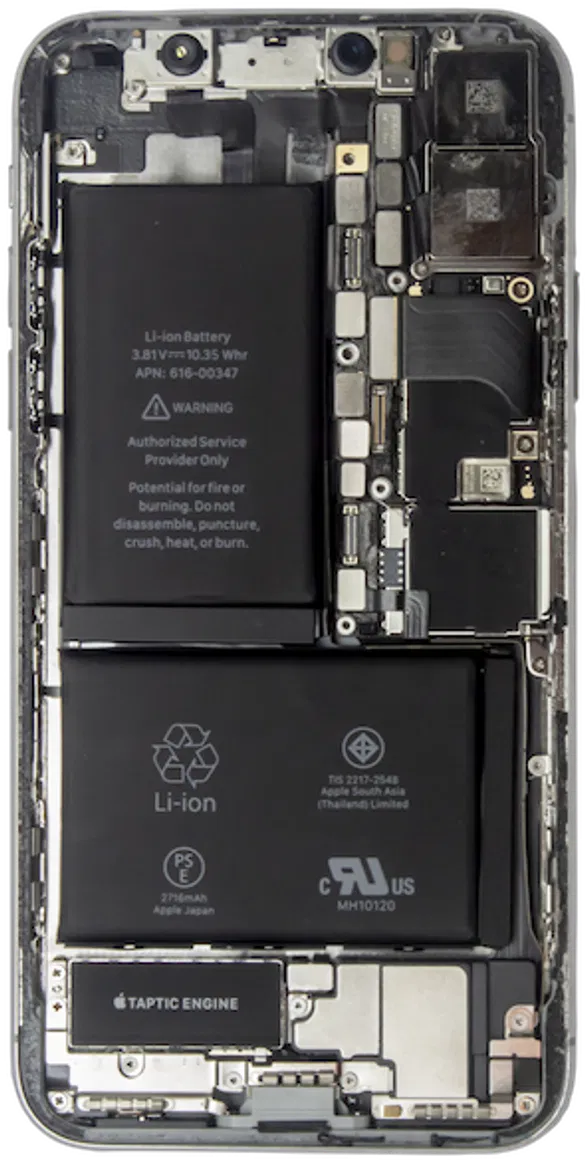
In the world of professional repair, OEM stands for Original Equipment Manufacturer. These are original iPhone parts: the exact same components that were inside your phone when you unboxed it at the Apple Store.
When we talk about OEM parts, we’re talking about the gold standard. These parts are either pulled from new devices (what the industry calls "New Pulls") or are refurbished using the original manufacturer's specialized machinery. The glass is the proprietary formulation you expect, the colors are calibrated to perfection, and the internal IC chips (the "brains" of the screen) communicate fluently with your phone’s logic board.
At Repaired Collective., we prioritize these parts because they offer the most premium experience. We don’t just want to fix your phone; we want to resurrect the potential of your device so it feels brand new.
The Three Tiers of iPhone Screens
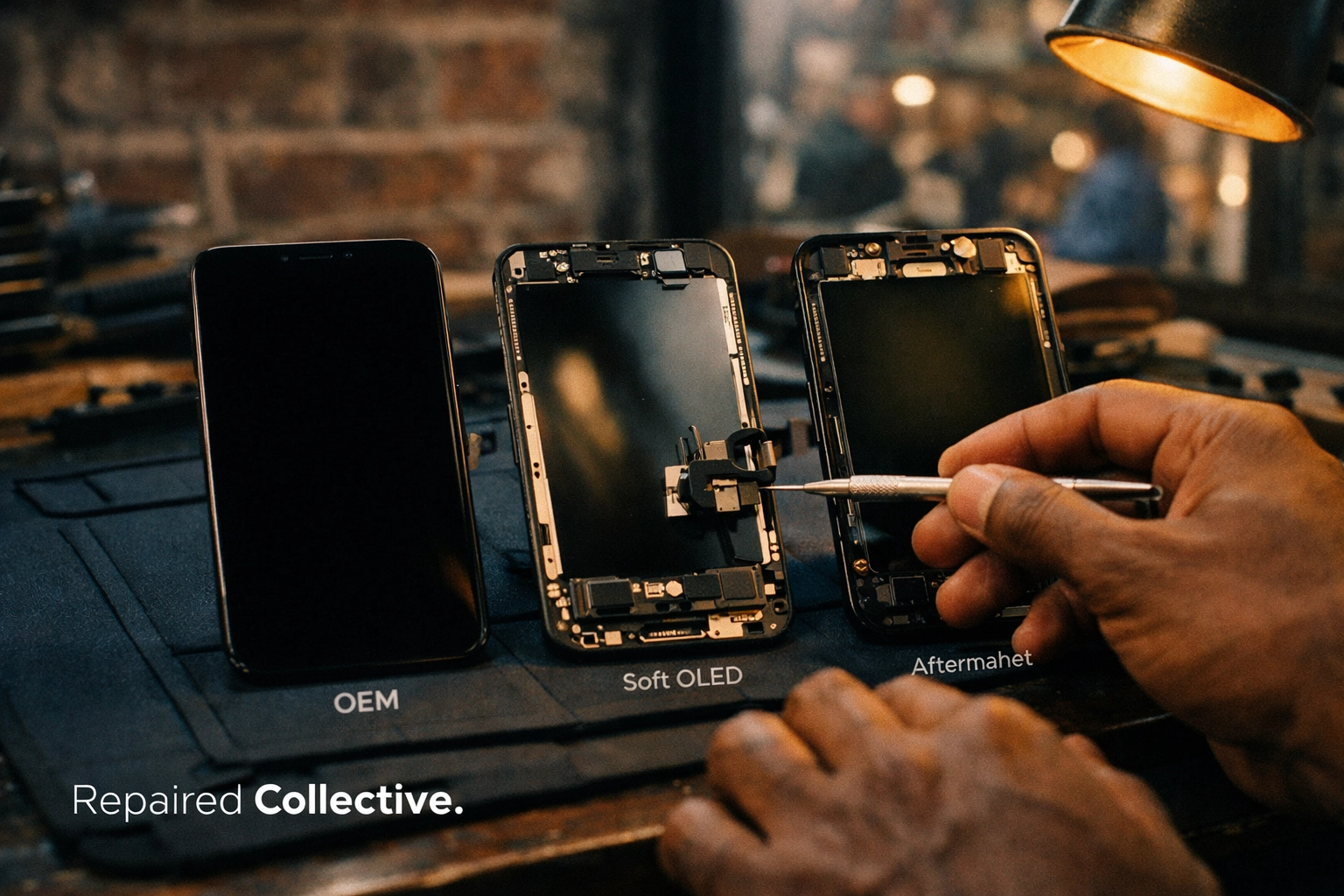
Not all repairs are created equal. Depending on your budget and how long you plan to keep your phone, we generally categorize screen replacements into three distinct tiers. Understanding these helps you make an informed decision rather than just hunting for the lowest price.
1. OEM / Refurbished (The Professional's Choice)
This is the top-tier option. These screens use the original LCD or OLED panel. If the glass was cracked but the display underneath was fine, the glass is replaced using factory-grade equipment.
- Pros: Perfect color accuracy, full brightness (nits), and 100% compatibility with Face ID and True Tone.
- Cons: Higher price point.
2. Soft OLED (The High-Quality Alternative)
If you’re looking for the best bang for your buck on an iPhone 12 or newer, Soft OLED is the way to go. Most modern iPhones use OLED technology, which allows the screen to be flexible (that’s why the borders are so thin). Aftermarket "Soft" OLEDs mimic this flexibility and color vibrance.
- Pros: Excellent color contrast and durability similar to OEM.
- Cons: Slightly different color calibration than original Apple parts.
3. Aftermarket / Hard OLED / LCD (The Budget Fix)
These are the "cheap" parts you’ll find at kiosks or cut-rate shops. Hard OLEDs are rigid, making them much more prone to cracking from a minor bump. Low-end LCDs used on OLED-native phones will drain your battery faster and look "washed out."
- Pros: Very affordable.
- Cons: Thick bezels, "bluer" tint, laggy touch response, and high failure rates.
Why Quality Matters: More Than Just a Pretty Picture
You might think, "It’s just a screen, as long as I can see my texts, I'm fine." But an iPhone screen is a highly integrated display assembly (the screen and all its connected parts). When you opt for a low-quality aftermarket part, you aren't just losing color: you're losing functionality.
The True Tone and Face ID Dilemma
Apple designs its hardware and software to work in a tight loop. Since the iPhone 8, True Tone (the feature that adjusts your screen's color temperature based on ambient lighting) is tied to the unique ID of your original screen. Cheaper shops often skip the "serialization" process. At Repaired Collective., we use specialized programmers to transfer that data to your new high-quality screen, keeping your features intact.
Similarly, Face ID is incredibly sensitive. Low-quality aftermarket parts often have poorly aligned brackets for the proximity sensor and infrared camera. A millimeter of misalignment can mean your Face ID stops working entirely. We treat every repair with the utmost care, ensuring that these irreplaceable biometric features remain secure and functional.
Touch Sensitivity and Haptics
Have you ever used a phone that felt "laggy" after a repair? That’s usually a bad digitizer (the part that feels your touch). OEM and premium parts offer instantaneous response times. Cheap aftermarket screens can suffer from "ghost touching": where the phone thinks you’re tapping things you aren't: which is a one-way ticket to frustration.
The Durability Gap: Ceramic Shield vs. Standard Glass
One of the biggest "invisible" differences between OEM and cheap aftermarket parts is the glass itself. Apple’s Ceramic Shield is incredibly tough. Most aftermarket manufacturers use standard tempered glass or lower-grade Gorilla Glass.
While no glass is truly "unbreakable," the premium-grade parts we use at Repaired Collective. are significantly more scratch-resistant and impact-resistant than the bargain-bin alternatives. If you want to keep your device protected after a repair, we always recommend a high-quality De-Protection 360 Rotatif Étui Flip or a solid screen protector to add that extra layer of security.
Software Warnings and "Important Display Messages"
If you’ve had a repair elsewhere, you might have seen a notification saying, "Unable to verify this iPhone has a genuine Apple display."
Starting with the iPhone 11, Apple began "locking" components to the logic board. Even if you swap two genuine Apple screens between two identical iPhones, that message will appear. While it doesn't always affect the performance of a high-quality part, it can be annoying.
We are upfront about this. We use the highest quality parts available to ensure that even if a software message appears, your unbeatable performance is never compromised. We focus on the supreme craft of the repair itself, ensuring the internal seal is replaced to maintain water resistance: something many shops ignore.
The Sustainability Factor: Repair Over Replace
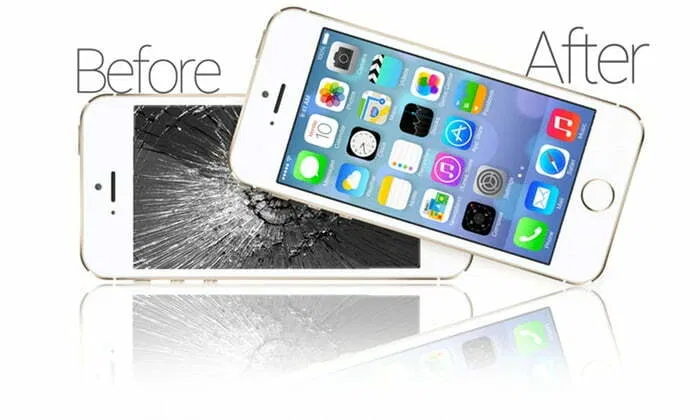
Choosing a high-quality repair isn't just a win for your wallet; it’s a win for the planet. When you opt for a premium screen or a miracle of battery replacement, you are extending the life of your device by years.
Cheap parts often fail within months, leading to more e-waste and more money spent. By choosing Repaired Collective., you are participating in the circular economy. We believe in the #RightToRepair and work hard to ensure that every device we touch stays out of a landfill. If a device is truly beyond saving, we even point our customers toward resources like MetroCycle.org to ensure it is recycled responsibly.
Why Brooklyn Trusts Repaired Collective.
We aren't a faceless corporation. We are a team of obsessed craftspeople who live and work in the same neighborhoods you do: from Bed-Stuy to Bushwick. We know you need your phone back fast, but we refuse to cut corners on part quality.
We offer:
- Same-Day Mobile Service: We come to you, whether you're at a coworking space in DUMBO or a cafe in Williamsburg.
- Transparent Pricing: No hidden fees. You choose the tier of part that fits your needs.
- Guaranteed Craftsmanship: We stand behind our work because we know our parts are the best in the business.
Don't let a broken screen slow down your hustle. Whether you need to bring batteries back to life or fix a shattered display, we’ve got the tools and the talent to get it done right.
Conclusion: Choose Quality That Lasts
In 2026, your iPhone is more than just a phone; it’s your office, your wallet, and your connection to the world. Cutting corners with "cheap" parts is a gamble that rarely pays off. By understanding the difference between OEM vs aftermarket iPhone parts, you can choose a repair that protects your investment and the environment.
Ready to see the difference that premium parts and expert service make? Book an appointment for a repair at repairedcollective.com and we’ll bring our mobile workshop right to your door. Let's get your device back to its prime.
#RepairedCollective #PhoneRepairNYC #NYC #Brooklyn #TechRepair #RightToRepair #CircularEconomy #EWaste #RepairNotReplace #SustainableTech